
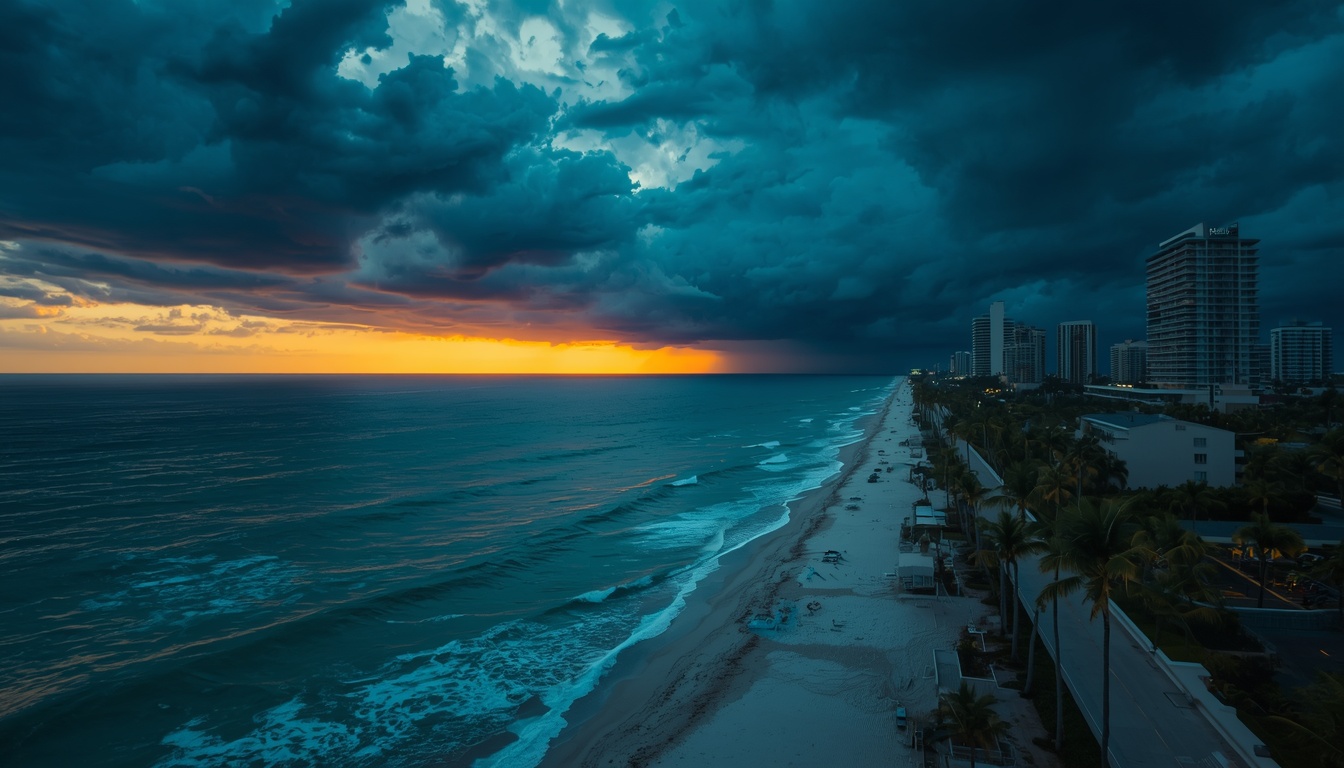
Miami hurricane season runs June through November. Here's the 2026 forecast, the key dates, and a practical checklist to protect your business or your stay before a storm ever forms.
Miami sits in one of the most storm exposed corners of the United States, and every year from June through November the city keeps one eye on the tropics. If you run a local business here or you are planning a stay in the area, hurricane season is not a reason to panic. It is a reason to plan. This guide covers when Miami hurricane season runs, what the 2026 forecast looks like, how the city earned its storm ready reputation, and a clear preparedness checklist you can act on today.
KEY INSIGHTS ▼
When Is Hurricane Season in Miami?
Hurricane season in Miami follows the wider Atlantic and Florida calendar. It officially begins on June 1 and ends on November 30. Those are the same months that apply across the state, so when people ask what months are the hurricane season in Florida, the answer is that same six month window. Activity is usually quiet early on, then builds through late summer.
The peak stretch for Miami and South Florida falls between mid September and October, when ocean temperatures and atmospheric conditions are most favorable for storms to form and strengthen. This is the period when watches and warnings are most common, and when local businesses and visitors should be paying the closest attention to the forecast. Early June and late November storms do happen, but they are the exception rather than the rule.
It helps to think of the season in three phases. The early phase, June and July, is usually calm and is the ideal time to prepare. The peak phase, August through October, is when the tropics are most active and readiness matters most. The late phase, November, tends to wind down, though the season is not officially over until the end of the month.
Why Miami Takes Storm Season Seriously
Miami has a long history with major storms. Hurricane Andrew, which struck just south of the city in 1992, remains one of the costliest hurricanes in United States history and reshaped how South Florida builds and prepares. That memory is a big reason local building codes, evacuation planning, and early preparation are taken so seriously across Miami-Dade.
After Andrew, Florida overhauled its building standards, introducing some of the strictest wind and structural requirements in the country. Newer construction across Miami is built to withstand far stronger winds than it was decades ago. Evacuation zones are clearly mapped, emergency alert systems are well developed, and the region drills for storms as a matter of routine.
None of that removes the risk, but it does explain the mindset. In Miami, storm preparation is treated as a normal part of the calendar, not an emergency reaction. Understanding that history helps explain why acting early matters more here than in almost any other city, and why locals rarely wait until a storm is on the map to get ready.
What the 2026 Miami Storm Season Forecast Means
Ahead of the 2026 season, the National Oceanic and Atmospheric Administration issued an outlook calling for a below normal season in the Atlantic, with roughly a 55 percent chance of below normal activity. Their range pointed to 8 to 14 named storms, 3 to 6 hurricanes, and 1 to 3 major hurricanes. Colorado State University later trimmed its own numbers to around 11 named storms, 5 hurricanes, and 2 major hurricanes, citing an expected El Nino pattern that tends to suppress Atlantic storm formation.
El Nino matters because it increases wind shear across the Atlantic and Caribbean, and strong wind shear makes it harder for hurricanes to organize and intensify. That is the main reason forecasters leaned toward a quieter outlook for 2026. Seasonal forecasts are also updated through the year, so the numbers can shift as conditions become clearer heading into the August to October peak.
A quieter forecast is welcome, but it is not a guarantee of safety. Forecasters repeat the same message every year: it only takes one. A single storm making landfall near Miami can knock out power, flood streets, and close roads for days, regardless of how the season looks on paper. Seasonal outlooks describe how many storms may form across the entire Atlantic. They say nothing about where those storms will go. Preparation is what protects you, not the seasonal average.
Hurricane Preparedness for Miami: A Practical Checklist
Good hurricane preparedness in Miami comes down to acting early, before a watch or warning is ever issued. Whether you are protecting a storefront, an office, or a place you are staying, the core steps are similar. The list below is organized by timing, because the right action depends on how close a storm is.
Before the season starts
✓ Build or refresh a supply kit with water, non perishable food, flashlights, batteries, a first aid kit, medications, and cash for at least 72 hours.
✓ Back up important documents and data to secure offsite or cloud storage.
✓ Review your insurance coverage, including flood coverage, which is often a separate policy.
✓ Save key contacts, including local emergency lines, your utility provider, and anyone you rely on day to day.
✓ Make sure your online information, such as hours and contact details, is accurate and easy to update quickly.
When a storm is approaching
✓ Secure windows, doors, outdoor furniture, signage, and anything loose that strong wind can turn into a projectile.
✓ Move valuable equipment and stock away from ground level in case of flooding.
✓ Charge devices and fuel up vehicles or generators.
✓ Communicate early with anyone who depends on you, whether that is staff, customers, or guests.
After the storm passes
✓ Document any damage with photos before you start cleanup, which helps with insurance claims.
✓ Check on staff, neighbors, or guests, and communicate your status clearly.
✓ Update your online presence as soon as you can so people know whether you are open, closed, or reopening.
Watch vs Warning: Knowing the Difference
One of the simplest but most important things to understand during Miami hurricane season is the difference between a watch and a warning, because the two call for different levels of urgency.
Conditions are possible
Finalize preparations, review your plan, and stay close to updates. This is your signal to get ready, not to wait.
~48 hours outConditions are expected
Act on your plan right away, including evacuation if officials advise it. The time for preparation is over.
~36 hours outGetting this distinction right can be the difference between a calm, orderly response and a last minute scramble. When in doubt, follow the guidance of Miami-Dade emergency officials rather than waiting to see what the storm does.
Staying Reachable When Miami Weather Turns
When a hurricane disrupts Miami, the people who recover fastest are usually the ones others can still find and contact. Phone lines go down, foot traffic disappears, and printed signs blow away, but a clear online presence keeps you connected. Make sure your hours, contact details, and current status are easy to find and simple to update the moment conditions change.
This is one of the most overlooked parts of storm readiness. People will search for you during and after a storm to find out whether you are open, whether their plans still stand, or how to reach you. If that information is missing or out of date, they move on. If it is current and clear, you keep their trust through the most disruptive days of the year.
Also Read
Florida Winter Rentals for Snowbirds 2026, Hollywood Beach & Miami Area Florida Beach Vacation Guide 2026, What to Pack and When to Go Best Beaches Near Miami 2026, the Honest Guide Things to Do in Hollywood Beach, FloridaFrequently Asked Questions
When is hurricane season in Miami? +
What months are the hurricane season in Florida? +
Is the 2026 Miami hurricane season expected to be active? +
How do you prepare for hurricane season in Miami? +
What is the difference between a hurricane watch and a warning? +
Is it safe to be in Miami during hurricane season? +
Plan Your Hollywood Beach Stay, Storm Season and All
Flexible booking and responsive local support on Hollywood Beach, so you can travel with confidence and get quick answers if the forecast shifts before your trip.